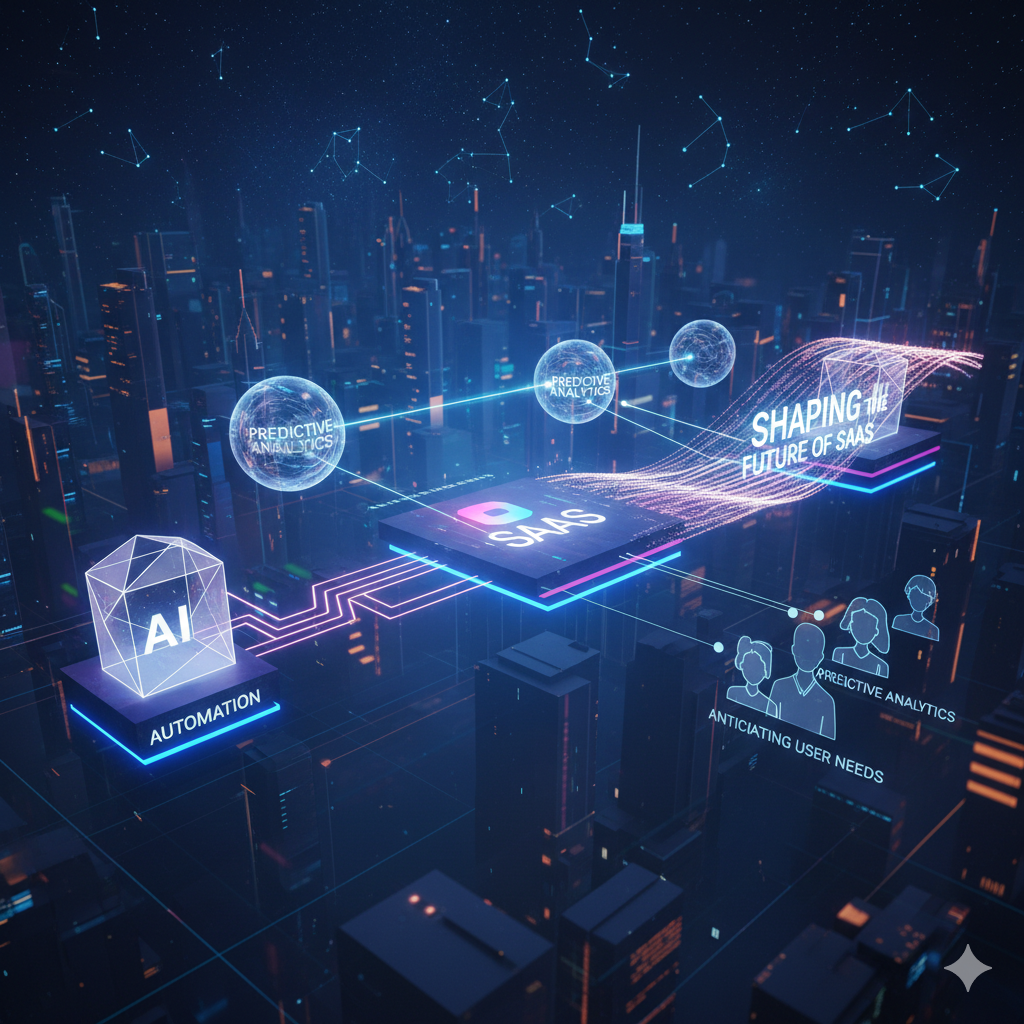
Beyond Efficiency: AI & Automation Driving Predictive Innovation in SaaS
AI and automation are no longer just about making SaaS run smoother; they're fundamentally changing how platforms innovate. Dive into how these technologies are driving predictive analytics, anticipating user needs, and shaping the future of SaaS.
Beyond Efficiency: How AI and Automation are Driving Predictive Innovation in SaaS
In the dynamic world of software as a service (SaaS), the pursuit of efficiency has long been the North Star. Companies have invested heavily in automation to streamline operations, reduce costs, and accelerate delivery. While these gains are invaluable, a new paradigm is emerging, pushing the boundaries of what's possible. We're moving beyond efficiency to an era where Artificial Intelligence (AI) and intelligent automation aren't just making things faster; they're making them smarter, predictive, and truly innovative.
This isn't merely an evolution; it's a profound industry transformation. The synergistic power of AI and automation is enabling SaaS platforms to anticipate market needs, personalize user experiences on an unprecedented scale, and proactively deliver groundbreaking solutions that redefine industry standards. Welcome to the age of predictive innovation in SaaS.
The Shift: From Reactive to Proactive SaaS Innovation
For years, SaaS innovation often followed a reactive model. Teams would analyze past user data, respond to feature requests, and adapt to market shifts post-factum. While agile methodologies brought speed, the underlying intelligence was largely human-driven and retrospective.
Today, AI in SaaS is fundamentally altering this equation. Machine learning algorithms, fueled by vast datasets, can identify patterns, predict future behaviors, and even spot emerging trends long before they become apparent to human analysts. When coupled with sophisticated automation trends, these insights can be immediately translated into action—whether it's automatically deploying personalized content, optimizing system performance, or even triggering proactive customer support.
This shift empowers SaaS companies to:
- Anticipate Customer Needs: Move beyond surveys and feedback forms to predict what users will want next, sometimes before they even realize it themselves.
- Proactively Address Challenges: Identify potential issues like churn risk, system bottlenecks, or security vulnerabilities and mitigate them before they impact users.
- Personalize at Scale: Deliver highly customized experiences for individual users or segments, making the platform feel intuitively tailored.
- Spot Market Opportunities: Recognize nascent trends and unmet needs, guiding strategic product development and expansion.
This isn't just about operational excellence; it's about embedding intelligence into the very DNA of product development and user engagement. It’s about building a truly future-proof digital strategy.
How AI & Automation Drive Predictive Innovation: A Deep Dive
The magic of predictive innovation isn't a single technology but a confluence of advanced capabilities working in harmony. Let's break down the core mechanisms:
1. Advanced Predictive Analytics and Machine Learning
At the heart of predictive innovation lies predictive analytics. AI-powered machine learning models ingest colossal amounts of data—user interactions, operational metrics, market data, support tickets, competitor activity, and more. Through sophisticated algorithms, these models can:
- Forecast Trends: Identify cyclical patterns, growth trajectories, and potential disruptions in the market or user behavior.
- Predict Churn: Analyze user engagement, feature usage, and support interactions to flag customers at risk of leaving, enabling proactive intervention.
- Recommend Solutions: Based on historical data and user profiles, AI can suggest optimal features, configurations, or even learning paths within the SaaS platform.
- Anomaly Detection: Instantly spot unusual activity, whether it's a security threat, a system performance issue, or an unexpected change in user engagement, allowing for immediate corrective action.
This data-driven foresight is the cornerstone for making informed, forward-looking decisions, truly embodying the future of SaaS.
2. Intelligent Automation Beyond Repetitive Tasks
Traditional automation excels at repetitive, rule-based tasks. Intelligent automation, however, takes this to the next level by incorporating AI to handle complex, non-routine scenarios. This includes:
- Dynamic Workflow Orchestration: Automation systems can adapt workflows in real-time based on AI-driven insights. For instance, if AI predicts a user needs assistance with a specific feature, an automated workflow might immediately trigger a personalized tutorial or connect them with a relevant support agent.
- Self-Optimizing Systems: AI can analyze system performance data and automatically make adjustments to optimize resource allocation, load balancing, or even code deployment, ensuring peak efficiency and reliability.
- Automated Content Personalization: Based on an individual user's behavior, preferences, and predicted needs, AI can automate the delivery of personalized content, recommendations, and in-app experiences.
This integration means that insights from AI in SaaS aren't just presented to human operators; they directly inform and execute automated actions, creating a virtuous cycle of continuous improvement and adaptation.
3. Hyper-Personalization at Scale
One of the most impactful outcomes of predictive innovation is the ability to offer truly hyper-personalized experiences to millions of users simultaneously. Gone are the days of one-size-fits-all. AI algorithms analyze individual user journeys, preferences, and predicted needs to tailor every aspect of the SaaS experience:
- Customized Dashboards: Presenting the most relevant data and tools upfront.
- Personalized Feature Recommendations: Suggesting new features or integrations that align with a user's specific workflow or business goals.
- Adaptive User Interfaces: Modifying the UI/UX based on a user's skill level, role, or preferred interaction patterns.
- Targeted Communication: Delivering in-app messages, email campaigns, or support outreach that is highly relevant and timely.
This level of personalization builds stronger user loyalty, reduces churn, and significantly enhances perceived value, driving SaaS innovation from the user's perspective.
Case Studies: Predictive Innovation in Action
To illustrate the power of this paradigm shift, let's look at how SaaS companies are leveraging AI and automation for predictive innovation:
Case Study 1: Proactive Customer Success & Churn Prevention
Imagine a CRM SaaS platform that uses AI to monitor user engagement metrics, support ticket history, and survey responses. Instead of waiting for a customer to express dissatisfaction, the AI model predicts which accounts are at a high risk of churn weeks in advance.
- Predictive Action: An automated workflow is triggered, notifying the account manager, scheduling a proactive check-in call, and suggesting tailored educational resources or feature demonstrations to re-engage the client.
- Innovation Outcome: Reduced churn rates, improved customer lifetime value, and a more proactive, value-driven customer success strategy. This is a direct outcome of predictive analytics shaping customer relationships.
Case Study 2: Intelligent Product Development and Feature Prioritization
A project management SaaS analyzes millions of user actions, common workflows, and integration patterns using machine learning. The AI identifies emerging bottlenecks or highly manual tasks that users are frequently performing outside the platform.
- Predictive Action: The AI not only flags these as potential areas for new features but also suggests specific functionalities that would address these gaps. This insight informs the product roadmap, allowing the development team to build solutions before users even explicitly request them, aligning with evolving automation trends.
- Innovation Outcome: A highly relevant and evolving product that consistently delights users by solving problems they didn't know they could solve, maintaining a competitive edge through continuous SaaS innovation.
Case Study 3: Dynamic Infrastructure Optimization for Performance
Consider a cloud-based analytics SaaS that handles variable workloads. Instead of relying on fixed scaling rules or manual adjustments, AI continuously monitors resource consumption, predicted future demand, and potential performance bottlenecks across its infrastructure.
- Predictive Action: The AI automatically scales resources up or down, redistributes loads, and even identifies potential hardware failures before they occur. It can proactively provision new instances in anticipation of peak usage, preventing slowdowns or outages.
- Innovation Outcome: Uninterrupted service, optimal performance, and significant cost savings through efficient resource utilization, ensuring high reliability that customers expect from a leading digital strategy.
The Future is Proactive: Embracing the Digital Strategy Shift
The trajectory is clear: the future of SaaS is inextricably linked with the intelligent application of AI and automation. Companies that embrace this shift will not only optimize their operations but will fundamentally transform how they innovate, compete, and deliver value.
This requires more than just implementing new tools; it demands a strategic reorientation. It's about cultivating a culture of data-driven decision-making, investing in the right talent, and continually exploring how advanced technologies can enable deeper insights and more intelligent actions.
For SaaS leaders, the question is no longer if to adopt AI and automation, but how to harness their power to move beyond incremental improvements and drive true predictive innovation—anticipating the future, shaping markets, and delivering unparalleled value to users worldwide.
Ready to Redefine Your SaaS Innovation Strategy?
Is your SaaS platform leveraging the full potential of AI and automation to anticipate, innovate, and lead? Share your thoughts in the comments below, or reach out to explore how a proactive digital strategy can transform your business for the future.