Beyond ChatGPT: How Generative AI is Reshaping SaaS Product Development Cycles
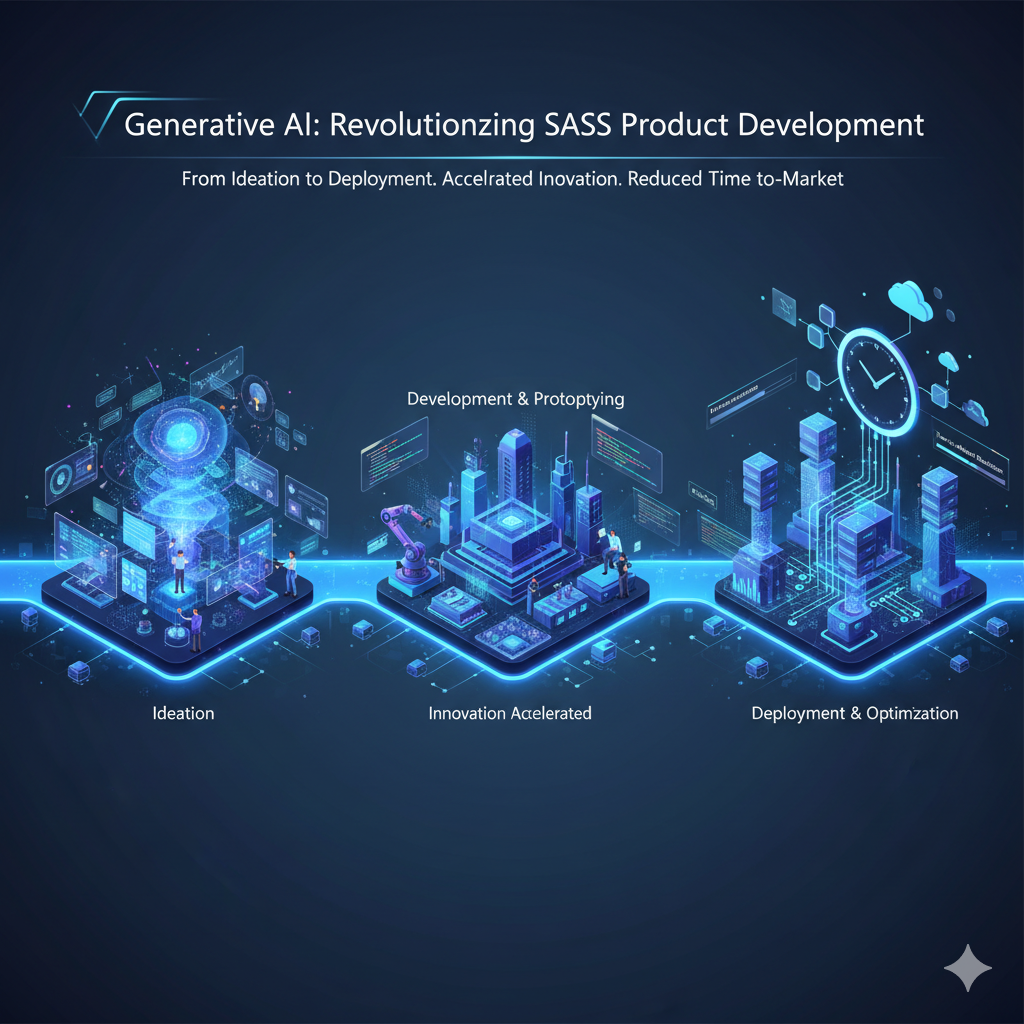
Dive deep into how Generative AI is revolutionizing every stage of SaaS product development, from ideation to deployment, accelerating innovation and reducing time-to-market for modern software companies.
Beyond ChatGPT: How Generative AI is Reshaping SaaS Product Development Cycles
The digital landscape is in constant flux, and at its epicenter is the relentless march of Artificial Intelligence. While public perception of AI has largely been shaped by the conversational prowess of models like ChatGPT, a profound, more structural transformation is quietly unfolding beneath the surface: Generative AI is fundamentally reshaping the very fabric of SaaS product development cycles. This isn't merely about automating repetitive tasks; it's about infusing intelligence, creativity, and unprecedented efficiency into every stage of a product's lifecycle, from the nascent spark of an idea to its polished deployment and continuous optimization. Modern software companies are discovering that embracing Generative AI isn't just an option—it's an imperative for accelerating innovation and drastically improving time-to-market.
Traditionally, SaaS product development has been a labor-intensive, iterative process, prone to bottlenecks and extended timelines. Ideation, design, coding, testing, and deployment each demand significant human capital and often involve numerous handoffs, increasing complexity and potential for error. Enter Generative AI. By leveraging algorithms that can create new content, code, designs, or data, these intelligent systems are not just assisting; they are actively participating, empowering teams to achieve what was once considered impossible with remarkable speed and scale. This article will explore the transformative impact of Generative AI across the entire SaaS product development spectrum, highlighting its potential to redefine how we build and deploy software.
The Generative AI Revolution: From Concept to Code at Lightning Speed
The true power of Generative AI lies in its ability to augment human capabilities at every critical juncture of SaaS product development. It's moving AI in SaaS from a supporting role to a central, active participant.
1. Ideation & Product Discovery: Unlocking New Possibilities
The journey of any successful SaaS product begins with a compelling idea. Historically, this phase relies heavily on market research, user interviews, and competitive analysis, often leading to incremental improvements rather than disruptive innovation. Generative AI changes this paradigm entirely:
- Market Analysis & Trend Spotting: AI models can sift through vast datasets of market reports, social media trends, and competitor offerings to identify unmet needs, emerging opportunities, and potential feature gaps with unparalleled speed. It can even predict future market shifts, guiding product management towards areas of high growth.
- Feature & Product Concept Generation: Based on identified market gaps and user pain points, Generative AI can propose novel product features or even entirely new product concepts. Imagine an AI suggesting a unique integration point or a new module that addresses a latent user desire, complete with preliminary specifications.
- User Story & Requirement Generation: Translating abstract ideas into actionable user stories and detailed requirements is a tedious task. Generative AI can automatically draft user stories, acceptance criteria, and technical specifications, significantly streamlining the initial documentation phase for software engineering teams.
- Prototyping & UI/UX Design: From text descriptions or wireframes, Generative AI can generate high-fidelity UI/UX mockups, complete with varying layouts, color schemes, and interaction flows. This allows product management and design teams to rapidly iterate on visual concepts, conduct A/B tests, and gather user feedback on diverse designs without extensive manual effort. Tools are emerging that can take a simple text prompt and render complex, interactive user interfaces, dramatically cutting down design cycles.
2. Software Engineering & Development: The Intelligent Co-Pilot
Perhaps the most tangible impact of Generative AI is felt within the software engineering pipeline. It's transforming the developer's workbench into an augmented environment:
- Code Generation & Autocompletion: Beyond simple autocompletion, Generative AI tools can now generate entire functions, classes, boilerplate code, and even complex algorithms based on natural language prompts or existing code context. This significantly reduces the time developers spend writing repetitive code, allowing them to focus on higher-level logic and unique problem-solving.
- Automated Code Review & Refactoring: AI can act as a vigilant peer reviewer, identifying potential bugs, security vulnerabilities, code smells, and suggesting optimizations for performance and readability. It can also propose automatic refactoring solutions, improving code quality and maintainability at scale.
- Debugging Assistance: Pinpointing the root cause of bugs can be notoriously time-consuming. Generative AI can analyze error logs, code changes, and execution paths to suggest likely causes and even propose fixes, accelerating the debugging process.
- Legacy Code Modernization: For SaaS companies dealing with technical debt, AI can assist in translating or refactoring legacy codebases into modern frameworks and languages, breathing new life into older systems and facilitating easier maintenance and expansion.
3. Testing & Quality Assurance: Elevating Product Reliability
Quality assurance is paramount for any SaaS offering. Generative AI is revolutionizing how we test, ensuring more robust and reliable products:
- Automated Test Case Generation: Writing comprehensive test cases is a laborious process. Generative AI can analyze functional specifications, user stories, and existing code to automatically generate unit tests, integration tests, and even end-to-end test scripts. This ensures wider test coverage and catches more bugs earlier in the SaaS product development cycle.
- Synthetic Data Generation: For scenarios requiring vast amounts of diverse data (e.g., training machine learning models, testing data-intensive features), Generative AI can create realistic synthetic datasets. This is particularly valuable for protecting user privacy when real data is sensitive or for generating edge cases that are difficult to find in actual usage.
- Performance & Security Testing: AI-powered tools can simulate high user loads to identify performance bottlenecks or proactively hunt for security vulnerabilities by generating intelligent attack vectors, bolstering the overall resilience of the SaaS platform.
4. Deployment & Optimization: Seamless Delivery and Continuous Improvement
Getting a product from development to the user is the final hurdle. Generative AI enhances this stage, too:
- Automated Infrastructure as Code (IaC): While not purely generative in the traditional sense, AI can help in optimizing and even generating configurations for cloud infrastructure, ensuring efficient, scalable, and secure deployment environments. It can suggest optimal resource allocation and scaling strategies.
- Intelligent Monitoring & Alerting: Post-deployment, Generative AI analyzes performance metrics, logs, and user behavior to predict potential issues before they impact users. It can generate insights for optimization, suggesting changes to code or infrastructure to improve efficiency or user experience.
- Personalized User Experiences (Briefly): While the blog focuses on development, it's worth noting that once deployed, AI in SaaS continues to drive value through hyper-personalization, tailoring user interfaces, feature recommendations, and content based on individual behavior—all powered by continuously learning algorithms.
Real-World Impact: Illustrative Scenarios of AI in Action
To truly grasp the transformative power of Generative AI in SaaS product development, let's consider a few illustrative scenarios:
A Rapidly Innovating Fintech SaaS: Imagine a fintech startup aiming to launch a new investment analysis platform. Instead of months, their product management team, augmented by Generative AI, analyzes millions of financial documents and market news articles to identify emerging investment strategies. The AI then proposes new analytical tools and a unique dashboard layout. Their software engineering team leverages AI to generate 70% of the boilerplate code for the backend services and automatically create API documentation. This allows them to move from concept to a functional MVP in weeks, not quarters, accelerating their time-to-market and securing early investor interest.
An Enterprise CRM Enhancing its Capabilities: A large enterprise CRM provider seeks to add a new lead scoring and nurturing module. Using Generative AI, they feed existing customer data and sales patterns into the system. The AI not only identifies key predictive features for lead conversion but also suggests the optimal workflow automation sequences. For development, the AI assists in generating complex database queries and a significant portion of the front-end components for the new module, ensuring seamless integration with the existing platform. Automated AI-generated test cases catch potential data integrity issues before deployment, leading to a smoother release and immediate value for customers.
A Healthcare SaaS Streamlining Compliance: A healthcare SaaS company needs to update its platform to comply with new regulatory standards. Generative AI analyzes the extensive legal texts and automatically identifies the specific data fields, reporting requirements, and security protocols that need modification. It then assists software engineering in generating the necessary code changes and even drafts compliant audit trails and documentation, drastically reducing the compliance burden and the risk of human error.
These scenarios, while illustrative, highlight a universal truth: Generative AI is not just a tool; it's a paradigm shift that enables businesses to achieve unprecedented levels of innovation and operational efficiency.
Conclusion: The Dawn of a New Era in SaaS Innovation
The era of Generative AI is upon us, and its impact on SaaS product development is nothing short of revolutionary. We are moving beyond ChatGPT being a standalone application; we are seeing Generative AI becoming an integrated, indispensable component across the entire software lifecycle. From accelerating ideation and strategic product management to streamlining software engineering and ensuring robust quality assurance, these intelligent systems are empowering teams to build faster, smarter, and with greater focus on true innovation.
SaaS companies that embrace these advancements will not only gain a significant competitive edge but also set new benchmarks for product quality and time-to-market. The future of AI in SaaS promises a collaborative ecosystem where human ingenuity is amplified by artificial intelligence, leading to products that are more responsive, more personalized, and more impactful than ever before. It's an exciting time to be at the forefront of software creation, as the very definition of what's possible continues to expand.
Ready to Transform Your SaaS Product Development?
Don't let your competition leave you behind. Explore how integrating Generative AI into your SaaS product development cycles can unlock unparalleled efficiency and drive your next wave of innovation.
Connect with our experts today for a personalized consultation on AI adoption strategies, or download our comprehensive guide: 'The Blueprint for AI-Driven SaaS Innovation' to learn more about harnessing the power of Generative AI for your business.
What are your thoughts on the future of AI in software creation? Share your insights and experiences in the comments below!